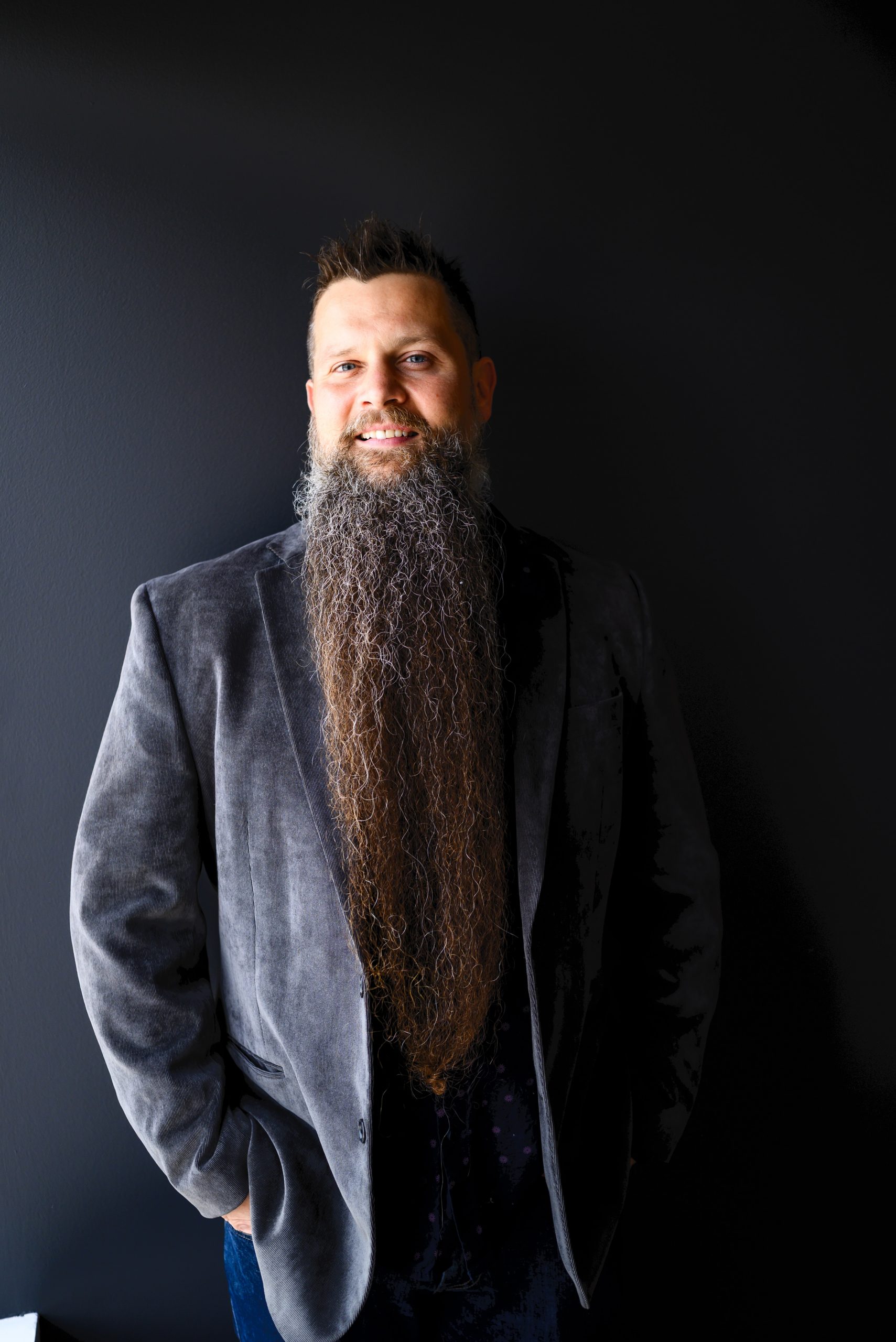
About Frank Lockwood

I’ve always been wired to move.


Not in a way that looks restless from the outside, more like a quiet internal pressure that wants to understand what’s broken, figure out what actually fixes it, and get there before anyone else has finished describing the problem.

For most of my career that worked in my favor. For some of it, it didn’t. Moving fast without the right structure underneath you is how you end up solving the wrong problem very efficiently. I learned that the hard way, more than once.

What changed wasn’t the drive. It’s that I learned how to use it differently. Slow down just enough to find the real constraint. Then move.

That’s the basis of everything I do now.


Where This Comes From

I’ve spent more than 20 years working inside agencies, product teams, and founder-led businesses where decisions carry real weight. I’ve led cross-functional teams, managed budgets and payroll, and lived inside the pressure that comes when growth outpaces structure.

Reverie Brewing Company

I co-founded Reverie Brewing from the ground up. Brand development, brewing processes, operational structure, built it piece by piece. What I didn’t build well enough was the partner alignment underneath it.

We had a fundamental disagreement about what the business was supposed to be after year 7. I wanted to build something with real growth trajectory. My partners were comfortable with a lifestyle business. Neither is wrong. But they’re incompatible, and we didn’t name that clearly enough early enough.

The exit was clean. No legal conflict, no burned relationships. Clean because I had built enough operational structure into the business that the separation didn’t require a fight. But I learned something I now bring into every founder conversation, misalignment between partners about what you’re actually building is not a relationship problem. It’s a structural clarity problem. And it compounds quietly until it doesn’t.

Greenwood Features

I own and operate an independent cinema in Bethel, CT with my amazing wife. When the market shifted and traditional single-use theaters started closing across the state. Within 4 years of opening, over one third of the theaters that had more experience, more funding and processes in place closed.

My wife and I made a deliberate decision to transform it into something different, a multi-use venue and community space that could survive what a traditional theater couldn’t.

Most of our competitors didn’t make it. We did. Not because we worked harder. Because we read the conditions honestly, made a hard pivot before we had to, and built a model that the market could actually support.

That experience is in the room every time I talk to a founder about what it actually takes to make a strategic shift under pressure.


The Work.

Before I built my own businesses, I spent more than two decades inside some of the world’s most complex organizations.

Not as the industry expert. As the person who could walk into a room full of senior operators, understand what was actually stuck, and move it.

At Comenity I was brought in to untangle a platform that had fractured across 50+ white-label brand clients. Sales teams were going rogue, customer service was drowning, internal teams were gridlocked. I interviewed 40+ stakeholders across clients, customer service, and end users and built the framework that let the whole organization function again.

At Toyota what started as a webpage redesign became a cross-functional infrastructure project spanning marketing, communications, dealerships, and manufacturing. I saw the real problem before the client did, expanded the scope to match it, and delivered $150K in annual savings and a 50% reduction in internal data collection time.

At Heineken I was embedded in an R&D function reporting directly to the US CEO, navigating global teams, regulatory complexity, and internal politics simultaneously to pioneer a first-of-its-kind direct-to-consumer model. They created a global UX role that didn’t exist before I showed up.

I ran similar work at MetLife alongside their global head of CX and CMO during a full brand relaunch, facilitating workshops with senior and executive leaders across their NYC offices and interviewing local market leads globally. At AB InBev I helped a marketing lead hold her ground inside one of the most politically cutthroat organizations in the industry by bringing enough structural clarity to the process that she became the undeniable subject matter expert in her own room.

And then there was Hanes. My strategy team at 360i was a week and a half out from a multi-day workshop at Disney World. They couldn’t fill their slot. I wasn’t even on the account. Someone said “we need Frank.” I asked a few questions, built the workshop, flew down, and ran it in a room full of senior operators from multiple agencies and the client. Before the day was over the client asked me to stay for the rest of the engagement. He’d seen the other workshops. Mine stood out.

That’s the pattern. It’s not about knowing your industry. It’s about knowing the process, the questions, and the people to ask to unlock clarity in rooms where complexity has made everyone too close to see it.


Frank Conversations. Real Progress.

If you are a professional advisor who works with founder-led businesses, or an owner yourself, you have probably seen this pattern. You solve the presenting problem and something structural keeps regenerating it. The numbers clean up and the founder is still the bottleneck. The legal structure is sound and decisions are still stacking at the top.

That upstream problem is what I address. I come in through conversations and the right questions, surface what is actually stuck, and make clear what needs to happen, who owns it, and how it moves. Not as a replacement for the advisors already in the room. As the person who works on what their scope does not cover. If that sounds like a gap you keep running into, I would like to talk.


How I Think

I use paper planes everywhere in my work and my brand. Not because they’re a clever visual. Because they’re honest. A paper plane has steps. There’s a process that gives it the best possible chance of taking flight. It doesn’t guarantee a perfect flight, it means there’s a plan, a direction, and a willingness to refold what isn’t working before you launch.

That’s how I approach every engagement. There’s always a process. The process is always honest about what it can and can’t guarantee. And if the fold is wrong, we say so and correct it.